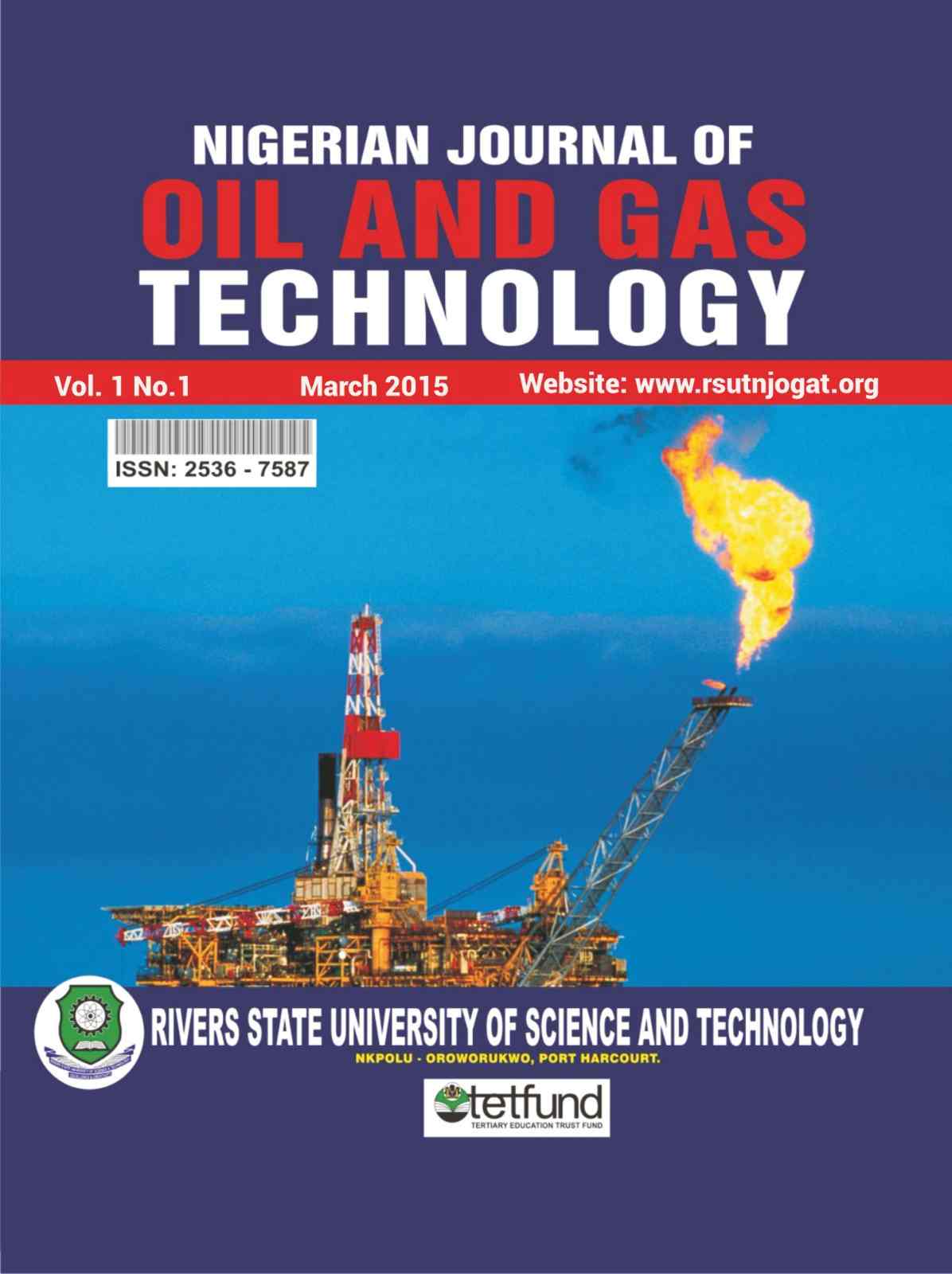
Petroleum products distribution system in Nigeria: Nature, mechanics and challenges
Аннотация
This study x-rayed the Nigerian petroleum industry with special focus on its nature—in terms of units, players, and regulatory authorities—their operational mechanics, and the challenges they face as they impact citizens’ welfare and the economy. Extant literature on the dynamics of regulations that created these actors and guide their roles and functions in the industry was reviewed. To bridge theory and practice, distribution theories and models were lucidly discussed, highlighting how the Nigerian economy has become constrained due to non-adherence to popular distribution principles and ethics, as well as the prevalence of sharp practices. This situation is compounded by regulatory incapacity to enforce control.
Further model analysis provides insights underscoring the distribution paradigm in the industry, including supply and demand chain management and their integration to predict the flow of products, information, finance, risk, and more—with special focus on achieving efficiency. Comparative analyses were made between the Nigerian experience and countries like Malawi and Kenya, especially regarding pricing. Factors impinging on the effectiveness of the petroleum distribution system in the economy discussed include constrained infrastructure, price instability, and the open tender system, among others.
The study concludes that given the prevalence of sharp practices, regulatory connivance, and price instability, the industry can hardly be described as stable. This instability negatively impacts citizens’ welfare and the economy. Recommendations include building domestic refining capacity, curbing militancy in the Niger Delta, and improving transparency in the distribution system.
Скачивания
Библиографические ссылки
Bacon, R. (2001). Petroleum Taxes. Viewpoint Note 240. Retrieved from
worldbank.org/Documents/PublicPolicyJournal/240Bacon-831.pdf.
Banomyong, R., & Supatn, N. (2011). Developing a supply chain performance.
Barr, N. (2004). Economics of the Welfare State. New York: Oxford University Bulletin.
http://rru
Business Daily. (2009). Nation Newspapers, 'ERC formula for fuel prices raises queries', Mungai Kihanya, 4th March.
Chima, A. (2007). Supply chain management issues in the oil and gas industry: Collaboration, customer relationship management: towards a common understanding of an emerging phenomenon. International Journal of Operations and Production Management, 29(6), 591-611.
Edoreh, A. (2007). Future of Nigerian Petroleum Industry. Lagos: Academy Press.
Ekakitie, E. S. (2010). Introduction to Business Management (2nd ed.). Benin City: Bob Peco Printing & Publishing Company.
Ekakitie, E. S. (2010). Marketing Communications & International Marketing: Nature and Scope (1st ed.). Benin City: Bob Peco Printing and Publishing Company.
Ekakitie, E. S. (2015). Conceptual Clarification of Distribution (unpublished).
Goldman, S. L., Nagel, R. N., et al. (1995). Agile Competitors and Virtual Organizations: Strategies for Enriching the Customer. Van Nostrand Reinhold.
Heikkilä, J. (2002). From supply to demand chain management: Efficiency and customer satisfaction. Journal of Operations Management, 20, 747-767.
Iyer, K. (2011). Demand chain collaboration and operational performance: Role of IT analytic capability and environmental uncertainty. Journal of Business and Industrial Marketing, 26(2), 81-91.
Jain, V., Wadhwa, K., & Deshmukh, S. G. (2009). Select supplier-related issues in modeling a dynamic supply chain: Potential, challenges and direction for future research. International Journal of Production Research, 47(11), 3013–3039.
Jibril, U., Garba, S., & Bukar, M. (2004). Demand Chain Management – Integrating Marketing and Supply Chain Management. Cranfield University, School of Management, Cranfield, Bedford, MK43OAL.
Jobber, D. (2004). Principles and Practice of Marketing. McGraw Hill.
Jüttner, U., Baker, S., & Christopher, M. (2004). Demand Chain Management – Integrating Marketing and Supply Chain Management. Publication of Cranfield School of Management, Cranfield, Bedford, MK43OAL.
Kimani, C. W. (2013). Supply Chain Management Challenges in Kenya Petroleum.
Kojima, C., & Masami, F. (2004). Supply Chain Analysis (2nd ed.). New Age.
Li, C. Y., & Wu, F. C. (2004). Operating mechanism of cyclic economy - the Malaysian petroleum law. Retrieved from /handle/123456789/1549.
Mohd, A. N. (2009). Sustainability of petroleum and environmental control in the Malaysian petroleum law. Retrieved from /handle/123456789/1549.
NNPC. (2006). NNPC Statistical Bulletin. Abuja: Various Issues. Retrieved from
Okafor, C. (2006). Deregulation of the Nigerian downstream oil sector: Keeping faith with a global trend. Available at www.pppra-nigeria.org.
Oluleye, O. (2004). Deregulation of the downstream petroleum sub-sector: The journey so far. Paper presented at a seminar organized for the Executives of CBN at Kwara Hotel, October 2004.
Owuor, F. O. (2007). Challenges faced by oil terminal joint ventures in Kenya. Industrial Marketing Management, 33, 475-489.
Piercy, N. (2002). Market-led Strategic Change (3rd ed.). Oxford: Butterworth-Heinemann Press (USA).
Raja-Mazlan, R. M., & Ali, K. N. (2006). Relationship between supply chain management and outsourcing. Paper presented at the International Conference on Construction Industry, Padang, Sumatera Barat, Indonesia.
Rong, Y., Zuo-Jun, M., & Snyder, L. (2009). The impact of ordering behavior satisfaction. Journal of Operations Management, 20, 747-767.
Schoell, F. W., & Guiltinan, P. J. (1992). Marketing: Contemporary Concepts and Practice (5th ed.). Allyn and Bacon, Needham Heights, MA.
Shah, N. K., Li, Z., & Lerapetritou, M. G. (2011). Petroleum refining operations: Strategies for enriching the customer. Van Nostrand Reinhold.
Sweeney, E. (2005). Managing the supply chain: The role of information and tool for SMEs in Thailand. Supply Chain Management: An International Journal, 16(1), 20-31.
Vargo, S., & Lusch, R. (2004). Evolving to a new dominant logic for marketing. Journal of Marketing, 68(January), 1-17.
Womack, J. P., & Jones, D. (1996). Lean Thinking: Banish Waste and Create Wealth in Your Corporation.
Zablah, A., Bellenger, D., & Johnston, W. (2004). An evaluation of divergent perspectives on customer relationship management: Towards a common understanding of an emerging phenomenon. Industrial Marketing Management, 33, 475-489.
Zeng, Y. Y. (2005). Shasha, study on the development of reverse logistics in cyclic economy. Logistics Sci-Tec, (8), 99-101. (In Chinese)