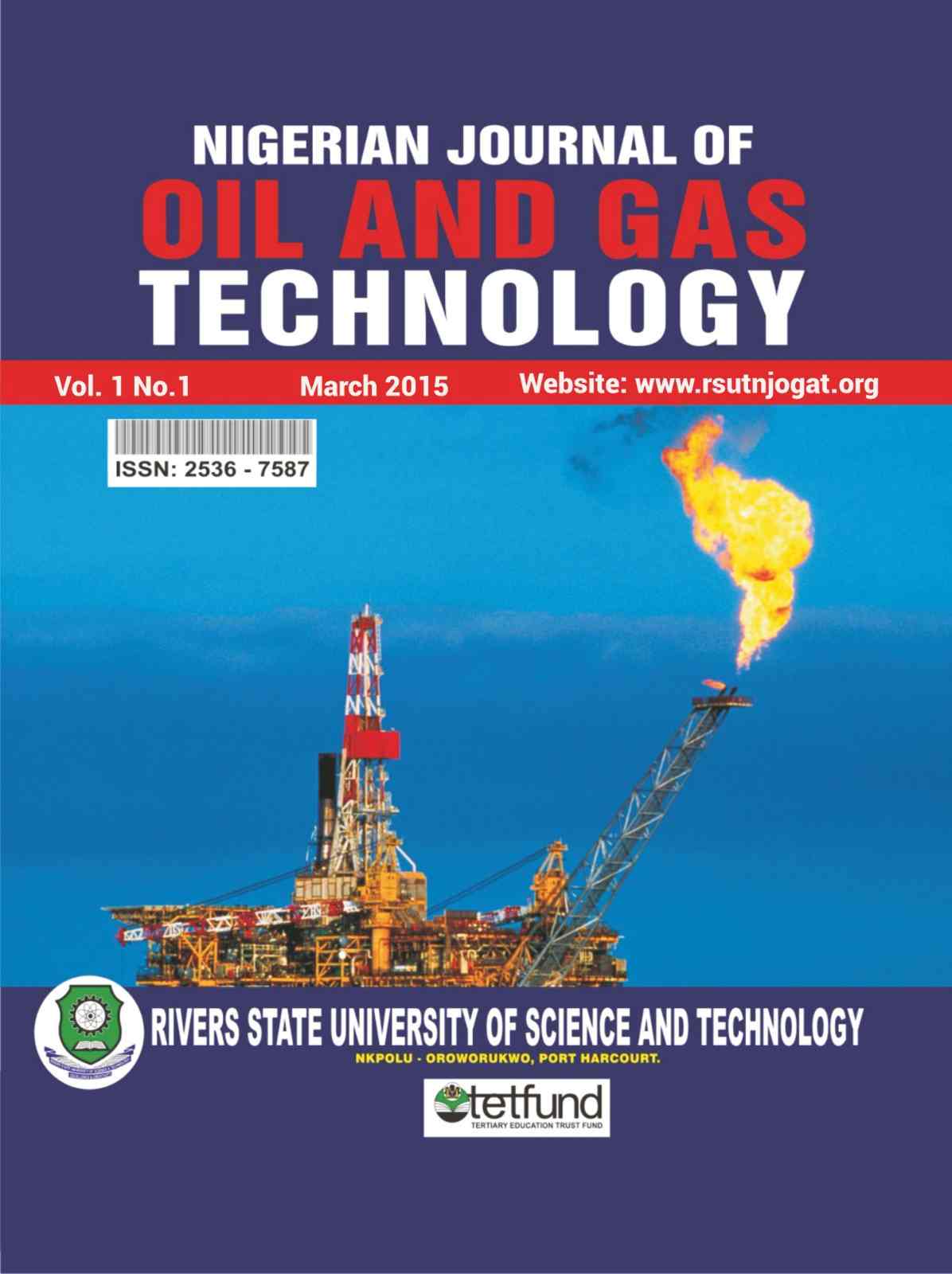
A Review of Mycotic Contaminants of Books and Vegetables in Some Oil and Gas Producing Areas in Nigeria
Abstract
This review evaluates the range of mycotic contaminants found on books, vegetables, and other materials in selected oil and gas producing areas in Nigeria. Mycotic contaminants, which include lower fungi such as yeasts and molds, are known to infest various substrates, including library materials and agricultural produce, causing significant detrimental effects. The study reveals that mycotic contamination is prevalent across almost all types of book materials used in libraries and commonly consumed vegetables. Notable vegetables frequently affected include Vernonia amygdalina (bitter leaf), Talinum triangulare (water leaf), and Telfairia occidentalis (pumpkin). Fungal contaminants were predominantly isolated from the surfaces of books and other library materials. The primary genera identified were Alternaria, Aspergillus, Cladosporium, and Penicillium, with Aspergillus species being the most prevalent and Penicillium the least. The presence of these fungal contaminants poses potential health risks and contributes to the deterioration of educational resources, highlighting a significant challenge in oil and gas producing communities.
Downloads
Riferimenti bibliografici
Abbas, S. D., Perrone, G., Ehrlich, K. & Samson, R. A. (2002). Biodiversity of Aspergillus species in some important agricultural products. Studies in Mycology, 59(1), 53–66.
Abbey, S. D. (2011). Foundations in mycology. Port Harcourt: Kenax. p.45.
Achar, P. N., Hermetz, S. R. & Taylor, J. (2009). Microscopic studies on the Aspergillus flavus infected kernels of commercial peanuts in Georgia. Ecotoxicology and Environmental Safety, 72(0), 2115–2120.
Asdeo, A. & Loonker, S. (2011). A comparative analysis of trace metals in vegetables. Research Journal of Environmental Toxicology, 5, 125–132.
Beech, I. B. (2011). The fungi. American Journal of Botany, 98(3), 464–438.
Bowman, S. M. & Free, S. J. (2006). The structure and synthesis of the fungal cell wall. Bioassay, 28(8), 799–808.
Burns, T. (2006). Evolutionary biology: a kingdom reviewed. Nature, 443(7113), 758–761.
Chang, S. T. & Miles, P. G. (2004). Mushroom cultivating: nutritional value, medicinal value and environmental impact (2nd ed.). London: CRC Press.
David, M. B. (2013). Information technology for early childhood education and quality education. A book of reading, vol. 12, pp. 78–98. Osia Publishing, Port Harcourt.
Disasterium (2015). Man-made disasters. Retrieved 1/10/2016.
Disegha, G. C. & Akani, N. P. (2015). Antimycotic effect of Allium sativum on selected fungi. Current Studies in Comparative Education, Science and Technology (UK), 2(2), 228–244.
Gabriel, C. D., Enwere, N. J. & Charles, J. (2008). Plant pathogens. Lagos: Afro-Orbis Publications.
Green, B. O. (2006). Principles of Angiosperm Taxonomy. Port Harcourt: Osia International Publishers.
Hawksworth, D. L. (2006). The fungal dimension of biodiversity: magnitude, significance and conservation. Mycological Research, 95(6), 641–655.
Hibbett, D. S., Binder, M. & Bishoff, O. E. (2007). A higher level phylogenetic classification of the fungi. Mycological Research, 111(5), 509–547.
Ibeh, I. N. (2014). Morphological distortion on erythrocytes in aflatoxicosis: any diagnostic value? Journal of Medical Laboratory Science, 4, 125–130.
Ifidon, S. E. (2006). Planning without information: The bane of national development. In 26th Inaugural Lecture Series. Ambrose Alli University, Ekpoma.
Igwela, J. N. B. & Owate, C. O. (2016). Effective marketing of library and information services: problems and prospects. International Journal of Arts and Humanities, 5(18), 244–254.
International Scientific Forum on Home Hygiene (2004). Guidelines for the prevention of infection and cross infection in the domestic environment (2nd ed.). Retrieved from http://www.ifh-homehygiene.org [Accessed 9 December 2014].
Kalagbor, I. A., Barisere, V., Barivule, G. & Bassey, C. (2014). Investigation of the presence of some heavy metals in four edible vegetables. Research Journal of Environmental and Earth Science, 6(1), 18–24.
Keller, N. P., Turner, A. & Bennett, J. W. (2005). Fungal secondary metabolism: from biochemistry to genomics. Nature Reviews Microbiology, 3(12), 937–947.
Lagzi, I., Mészáros, R., Gelybó, G. & Ádám Leelõssy, A. (2013). Atmospheric chemistry. Hungary: Eötvös Loránd University.
Lockhart, R., Van Dyke, M. L., Beadle, I. R. & Humphreys, P. A. J. (2006). Molecular biology detection of anaerobic gut fungi. Applied and Environmental Biology, 72(8), 5659–5661.
Maxwell, E. (2010). Infection: molecular biology and genomics. Ibadan: Caister Academic Press.
Okwu, G. I., Pnemila, N., Santosh, K. & Sharma, A. (2010). Quantification of aflatoxin B1 in ready-to-use food thickeners in South-east geo-political zone in Nigeria. African Journal of Microbiology Research, 4(16), 1788–1793.
Parker, T. A. (2016). Integrated pest management for libraries and archives. London: Pest Control Services Inc. Retrieved from www.unesco.org [Accessed 1 October 2016].
Perrone, G., Susca, A., Cuzzi, G., Khrlich, K., Varga, J., Frisvad, J. & Samson, R. A. (2015). Biodiversity of Aspergillus species in some important agricultural production study. Mycology, 59(1), 53–66.
Rachaputi, A., Reddy, B. N. & Raghavender, C. R. (2002). Outbreaks of aflatoxicosis in India. African Journal of Food Agriculture, Nutrition and Development, 7(5), 15–27.
Sena, I. (2006). Disaster prevention and preparedness. Ethiopia: Kifle W/Michael Jimma University Press.
Somashakor, D., Rati, E. R. & Chandrashekar, A. (2014). Isolation, enumeration and PCR characterization of aflatoxigenic fungi from food and feed samples in India. Food Microbiology, 21, 809–814.
Sreenivasa, M. Y., Gonzaliz, A., Jaen, M. T. & Janordhan, G. R. (2012). A PCR-based assay for the detection and differentiation of potential fumonisin-producing Fusarium verticillioides isolated from Indian maize kernels. Food Biotechnology, 22(2), 160–170.
Tudzynski, B. (2005). Gibberellin biosynthesis in fungi: genes, enzymes, evolution, and impact on biotechnology. Journal of Applied Microbiology and Biotechnology, 66(6), 597–611.
Turner, K., Cardwell, K. K. & Hall, A. J. (2010). Dietary aflatoxin exposure and impaired growth in young children from Benin and Togo - a cross-sectional study. British Medical Journal, 352, 20–21.
Vilgalis, R., James, T. Y. & Taylor, J. W. (2009). Fungi eumycota: mushrooms, sac fungi, yeast, molds, rusts. Lagos: Afro Orbis Publications.
Watanabe, M., Ohnishi, T., Araki, E., Kanda, T., Tomita, A., Ozawa, K., Goto, K., Sugiyama, K., Konuma, H. & Hara-Kudo, Y. (2014). Characteristics of bacterial and fungal growth in plastic bottled beverages under a consuming condition model. Environmental Science and Health A Toxic Hazard Substance Environmental Engineering, 49(7), 819–826.
Wild, C. P. & Hall, A. (2008). Summary of data on aflatoxin exposure in West Africa. In Cardwell K. F. (Ed.), Proceedings of the workshop on mycotoxins in food in Africa. International Institute of Tropical Agriculture, Cotonou, Benin, pp. 26–30.
Xavier, S. (Ed.) (2014). Modern issues in environmental science. Kolkata: Department of Environmental Studies, University of Kolkata.