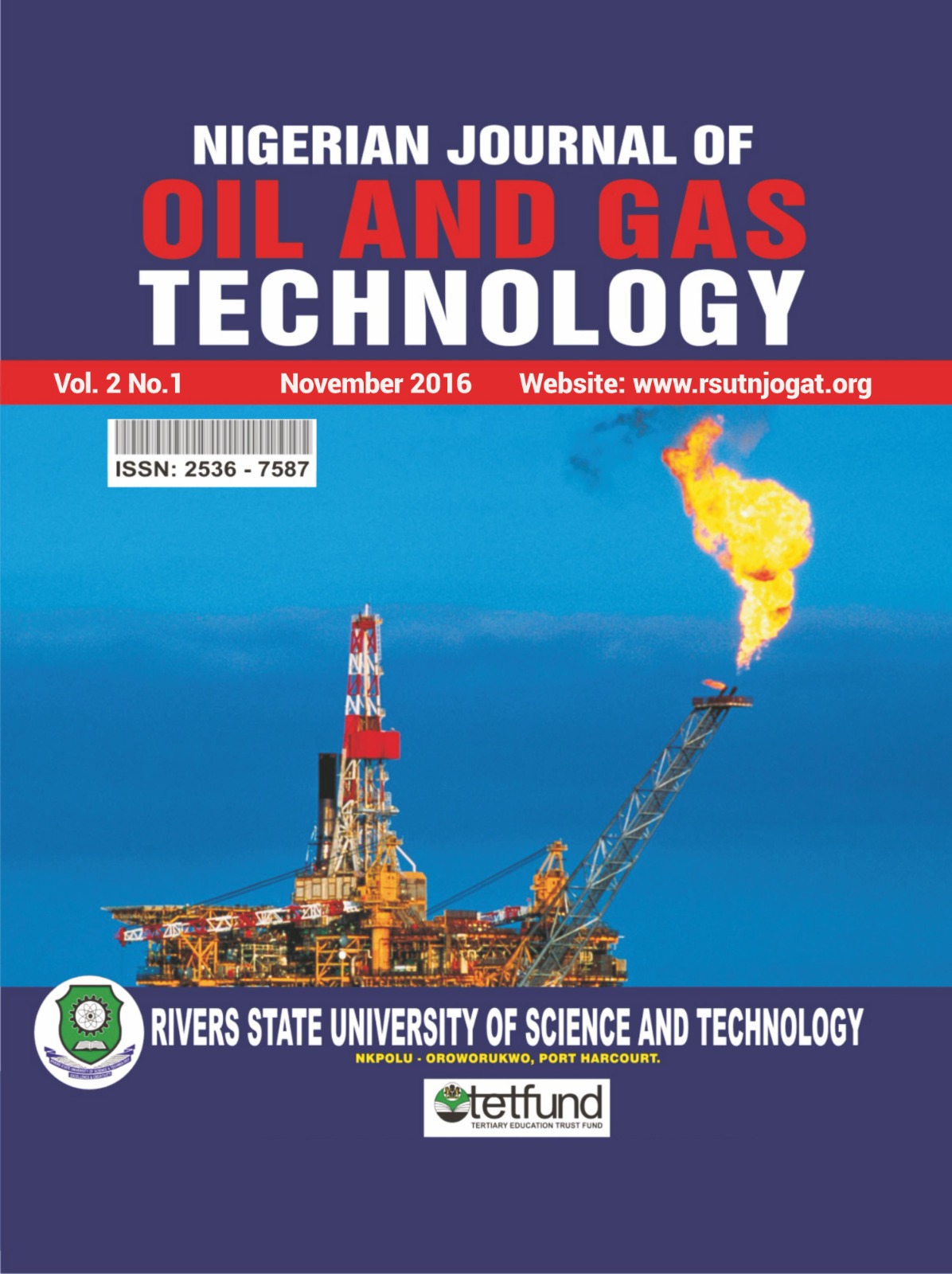
Oil Spills, Management and Impact on Local Communities in the Niger Delta of Nigeria
Resumen
The enormous damage done by oil spills in the Niger Delta merits a special attention as enunciated by this study. The incidents of crude oil spills in the Niger Delta are phenomenal. For examples, WHO (2003) reports that an average of 240,000 barrels of crude oil are spilled in this region annually. Between 1976 and 1996 an estimated 1.89 million barrels of petroleum were spilled into the Niger Delta as reported by the Department of Petroleum Resources. The damage done to the ecosystems by oil spills has affected human lives through incapacitation of natural phenomena; deforestation, destruction of vegetation, pollution that has affected aquaculture and soil fertility negatively; poisoned animals and impaired human health. These observations made this investigation desirable. By a careful and systematic literature review enough information was obtained which facilitated some conclusions and recommendations. An indisputable fact is that oil spill phenomenon is doing irreparable damage to the people of the Niger Delta. The long run effects of oil spills cannot be reversed. Consequently, the Federal Government of Nigeria and the oil prospecting companies should as a matter of urgency, provide adequate and functional remedial measures devoid of political idiosyncrasies. Individuals and communities exposed to oil spills should, as a moral obligation, be adequately compensated. In the real sense of it no compensation can be adequate but let some measure of justice be seen to be done. It is morally wrong to prospect the resources of the local communities and leave them to die installmentally due to the negative effects of oil spills
Descargas
Referencias
Azaiki, S. (2007). Inequities in Nigeria politics. Ihasan y-Books.
Anderson, I. (2005). Niger River Basin: A vision for sustainable development (pp. 1–131). The World Bank.
Bautista, H., & Rahman, K. M. M. (2016). Review on the Sundarbans Delta oil spill: Effects on wildlife and habitats. International Research Journal, 1(43, Part 2), 93–96.
Bautista, H., & Rahman, K. M. M. (2016). Effects of crude oil pollution in the tropical rainforest biodiversity of Ecuadorian Amazon region. Journal of Biodiversity and Environmental Sciences, 8(2), 249–254.
Bronwen Manby. (1999). The price of oil. Human Rights Watch. Retrieved November 9, 2007.
CNN. (2010). Oil disaster by the members. CNN. Retrieved July 1, 2010.
Environmental Resources Managers Ltd. (1997). Niger Delta environmental survey final report Phase 1; Volume 1: Environmental and socio-economic characteristics. Lagos: Niger Delta Environmental Survey.
Fubara, B. A. (2002). The politics of the Niger Delta. In Ozon Esion et al. (Eds.), The Niger Delta Development Commission: Towards a development blue print. Port Harcourt Centre for Advanced Social Science.
Kentucky crude oil spill may reach river, contaminate water. (2015, April 20). [Online news report].
Interview with Basil Omiyi (Managing Director, SPDC). (2006). The Shell sustainability report (p. 33).
Ntukekpo. (1996). Spillage: Bane of petroleum. Ultimate water technology environment.
Federal Republic of Nigeria (FRN). (2006). National Oil Spill Detection and Response Agency (Establishment) Act No. 5, October 18, 2006. Abuja: Federal Ministry of Information.
Nwaoguikpe, R. N. (2011). The effect of crude oil spill on the ascorbic acid content of some selected vegetable species: Spinach (Oleraceae), Solanum melongena and Telinum triangulare in an oil polluted soil. Pakistan Journal of Nutrition, 10, 274–281.
Nkwoocha, E. E., & Duru, P. O. (2010). Micro-analytic study on the effect of oil pollution on local plant species and food crops. Advances in Bioresources, 3, 574–581.
Dunnet, G., Crisp, D., Conan, G., & Bourne, W. (1982). Oil pollution and seabird populations (and discussion 7). Philosophical Transactions of the Royal Society of London B, 297(1087), 413–427.
Edema, N. E., Obadoni, B. O., Erheni, H., & Osakwuni, U. E. (2009). Eco-phytochemical studies of plants in a crude oil polluted terrestrial habitat located at Iwhrekan, Ughelli North Local Government Area of Delta State. National Science, 7, 49–52.
United Nations Development Programme (UNDP). (2006). Niger Delta Human Development Report (p. 76). Retrieved June 19, 2011.
Nwilo, P. C., & Badejo, O. T. (2009). Impacts of oil spills along the Nigerian coast. The Association for Environmental Health and Sciences.
OlagoKe, W. (1996). Niger Delta Environmental Survey: Which way forward?
Ozekhome, E. (2011). Legislation for growth in the Niger Delta Region. Midweek Pioneer.
Oku, H. B. (2003). The Niger Delta environment: Its local geography. Port Harcourt: Prelyn Publishers.
Osuji, L. C., & Nwoye, I. (2007). An appraisal of the impact of petroleum hydrocarbons on oil fertility: The Owaza experience. African Journal of Agricultural Research, 2, 318–324.
Ordinioha, B., & Sawyer, W. (2008). Food insecurity, malnutrition and crude oil spillage in a rural community in Bayelsa State, South-South Nigeria. Nigerian Journal of Medicine, 17, 304–309.
Ordinioha, B., & Sawyer, W. (2010). Acute health effects of a crude oil spill in a rural community in Bayelsa State, Nigeria. Nigerian Journal of Medicine, 19, 140–144.
Osam, M. U., Wegwu, M. O., & Uwakwe, A. A. (2011). The Omoku old pipeline oil spill: Total hydrocarbon content of affected soils and the impact on the nutritive value of food crops. Archives of Applied Science Research, 3, 574–581.
Oil spill disrupts water supply—Nation—The Star online. (2015, April 20). [Online news report].
Oil slick from the Montara oil spill in the Timor Sea, September 2009.
Pipeline explosion kills at least 200. (2006). CNN. Retrieved May 29, 2007.
Punch. (2016, October 31). Communities threaten Escravos. Punch Newspaper, p. 16.
Punch. (2016, November 3). Bayelsa communities groan as oil spills pollute environment. Punch Newspaper, p. 13.
Shell Nigeria. (2006). Annual report.
Shell Nigeria. (1997–2006). Annual reports.
United Nations Development Programme (UNDP). (2006). Niger Delta Human Development Report.
Vidal, J. (2010). Nigeria's agony dwarfs the Gulf oil spill. The US and Europe ignore it. The Observer. Retrieved July 27, 2010.
World Health Organization. (2002 & 2003). The world health report: Reducing risks, promoting healthy life (pp. 1–71). Geneva: World Health Organization.
Wikipedia. (2016, July). Environmental issues in the Niger Delta. In The free encyclopedia.