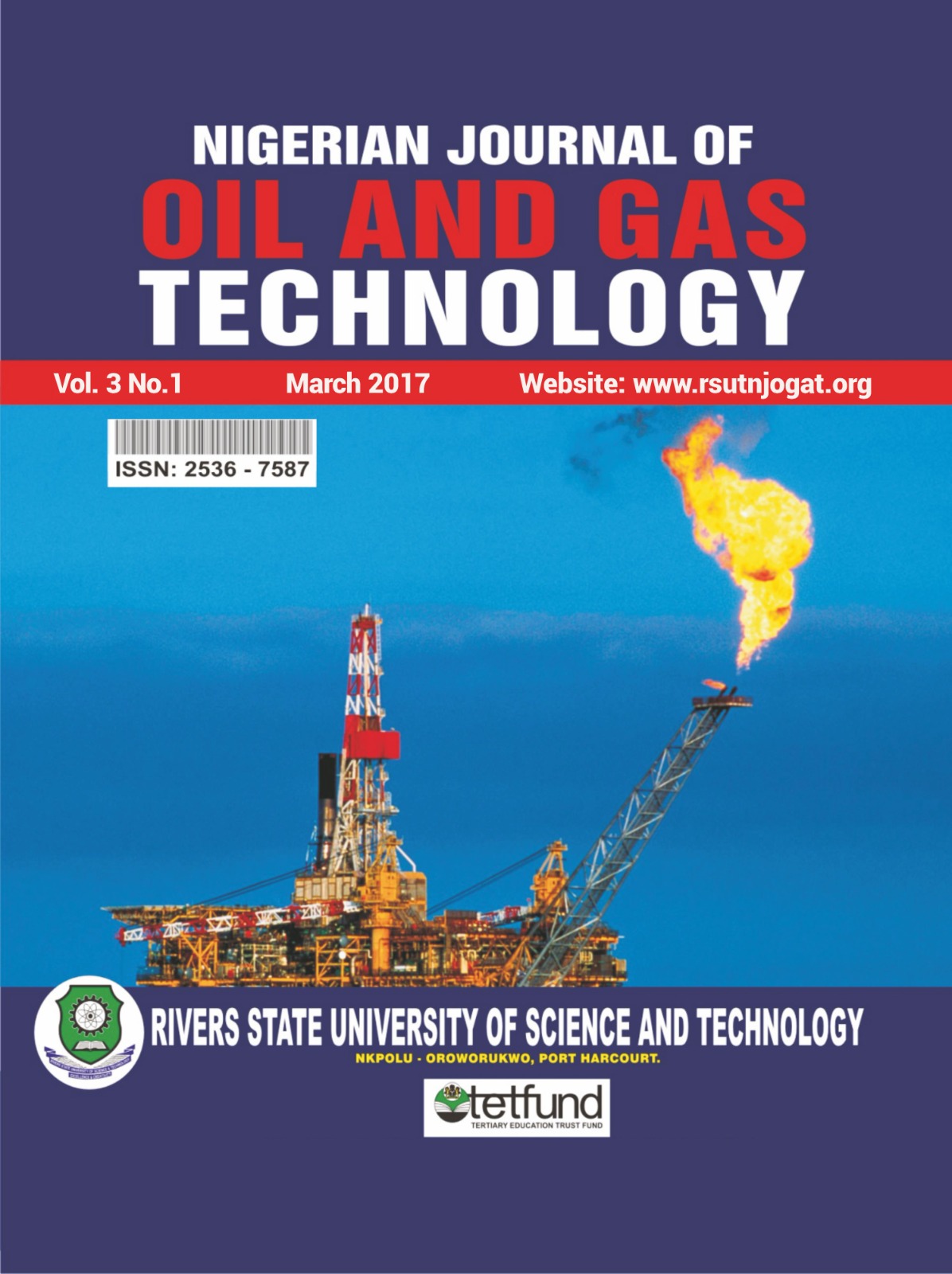
Gas Flaring in the Niger Delta Region and Its Reportage by Select Nigerian Newspapers and Magazines: A Normative Appraisal
Abstract
This study sought to ascertain the extent to which Nigerian newspapers and magazines have called attention to the dangers associated with gas flaring in the Niger Delta region with a view to stemming its veracity. The research questions predominantly bordered on finding out the depth, nature and prominence accorded the issue of gas flaring and its dangers by the newspapers and magazines studied. In other words, to what extent have the newspapers and magazines studied accorded prominence, through placement, to the dangers of gas flaring in the region with a corresponding advocacy on how to curb the menace? The peculiarities of the study necessitated content analyses of two newspapers and two magazines purposively selected based on the fact that they are foremost dailies and weeklies. The second quarter of 2014 formed the period of study. Content categories were streamlined along straight news, features, editorials and advertorials. Inter-coder reliability stood at 0.93. Analysis was done using column centimeters. Findings revealed that the newspapers and magazines studied did not accord prominence to the subject matter. Descriptively, less than 1% of the total news space of the newspapers and magazines studied was devoted to straight news and features on the subject matter. For the editorial and advertorial spectrum, a lateral 0% was observed. Deductively, the newspapers and magazines studied did not devote significant space to advocacy. The summation however was that the reportage given to the subject matter by the newspapers/magazines was not significant enough to draw attention to the menace of gas flaring and its attendant consequences. The recommendations drawn from this finding focused on the need for Nigerian newspapers/magazines to increase content on issues with ecological implications, especially gas flaring while precipitating the consciousness for environmentally friendly industrial practices.
Downloads
Riferimenti bibliografici
Ajayi, R. (November 8, 2011). Climate watch: Green house gas and vehicular emission in Nigeria. Vanguard. P.37.
Ajugwo, A.O. (2013). Negative effects of gas flaring: The Nigerian experience. Journal of environmental pollution and human health. 1(1) 6 – 8.
Alaba, O.B., Ejiofoh, B.T. and Foye, V.O. (2012). Gas flaring, agriculture and livelihood security in the Niger Delta Areas of Nigeria.
(www.naee.org.ng/files/naee_paper_draft_1(2).pdf). Accessed 26 – 01 – 2015.
Baran, S. and Davis, D. (2000). Mass communication theory: Foundations, ferment and future. Belmont: Wadsworth/Thomson learning.
Carter, R., Stamm, K. and Heintz-Knowles, S. (1992). Agenda setting and consequentiality. Journalism Quarterly. 69(4), 869 – 877.
Dominick, J. (2011). The dynamics of mass communication: Media in transition Athens: McGraw-Hill.
Duke, N. (2015). Environmental communication for behavior change.
www.nicholas.duke.edu/del/environmental-communication-behaviour-change. accessed 26-01-2015.
Eboh, M. (November 25, 2014). Nigeria loses N27B to gas flaring in one month. Vanguard. P. 47
Hasan, S. (2013). Mass communication: principles and concepts. New Delhi: CBS Publishers and Distributors Limited.
Holder, D. and Trenor, A. (1997). Media advocacy in community prevention: News as a means to enhance policy change. Addiction. 92(2). 189-199.
Jurin, R., Roush, D. and Danter, K. (2010). Environmental communication. Indian: Pearson Custom Publishing.
Kerlinger, F. (2000). Foundations of behavioural research. New York: Hott, Rinehart and Winston.
Kim, Y., and Ball-Rokeach, S. (2006). Civic engagement from a communication infrastructure perspective. Communication theory. 16(2), 173 – 197.
Martin, S.E. and Mail, P.D. (1995). The effects of the mass media on the use and abuse of alcohol. London: Diane Publishing Co.
Mazur, A. and Lee, J. (1993). Sounding the global alarm: Environmental issues in the US national news. Social studies of science. 23(1), 681-720.
McQuail, D. (2012). McQuail's Mass Communication Theory (6th edition). Thousand oaks, California: SAGE Publications Inc.
Noelle – Neumann, E. (1992). The spiral of silence: A theory of public opinion. Journal of communication. 24(2), 43 – 51.
Nwankwo, S. and Ibeh, K. (2015). The Routledge Companion to Business in Africa. New York: Routledge.
Okeagu, J. E., Okeagu, J. C., Onuoha, C. N., Ademiluyi, O. and Adegoke, A. O.(2006). Journal of environmental management.79(1). 133-139.
Okon, G.B. (2013). The coverage of Augusta 109 naval helicopter crash in Bayelsa State by three Nigerian newspapers: The depth, disposition and pattern. Journal of humanities and social sciences. 12 (2). 133 – 122.
Okon, G.B. (2013). The Niger Delta crisis and advocacy for peace by the Nigerian press: A content analysis of three Nigerian newspapers. New media and mass communication. 14(1), 7-17.
Orimoogunje, O.I., Ayalade, A., Akinkuolie, T.A. and Odiong, A.U. (2010). Perception on the effect of gas flaring on the environment. Research journal of environmental and earth sciences. 2(4), 188-193.
Sampei, Y. and Aoyagi, U.(2009). Mass media coverage, its influence on public awareness of climate change issues, and implications for Japan's national campaign to reduce green house gas emission. Global environmental change. 19(1). 203-212.
Saunders, B.J., and Goddard, C. (2002). The role of mass media in facilitating community education and child abuse prevention strategies. NCPC issues. 16(1) 1 – 24.
Savabi, M.R. and Stockle, C.O.(2001) Modeling the possible impact of increased CO2 and temperature on soil water balance, crop and soil erosion. Environ model. 16(7), 631 – 640.
Silva, S.D. (2002). Communication breakdown: The media effects on Ecuador's environment. Earth communication journal. 2(1), 88-106.
Simon, R. (1971). Public attitudes towards population and pollution. Public opinion quarterly. 35(1), 95 – 102.
Stamm, K., Clark, F. and Eblacas, P.R. (2000). Mass communication and public understanding of environmental problems: The case of global warming. Public understanding science. 9(1), 219 – 237.
Syfert, C. (2013). Visual images and the rhetoric of environmental advocacy. Open access master's thesis (University of Rhode Island, paper 20).
Thurlow, C., Lengel, L. and Tomic, A. (2004). Computer mediated communication, social interaction and the internet. Thousand Oaks, California: Sage.
Ukala, E. (2010). Gas flaring in Nigeria's Niger Delta : Failed promises and reviving community voices. Washington and Lee journal of energy, climate and the environment. 2(1). 98-126.
World Bank Report (2004).
Wimmer, R. and Dominick, J. (2011). Mass media research. Belmont: Wardsworth.
Woodruff, K. (1996). Alcohol advertising and violence against women: A media advocacy case study. Health education and behaviour. Vol. 23(3), 330-345.